
Imagine it’s a typical drizzly evening on the Mersey; you’ve just arrived home, but as you turn the deadbolt, everything grinds to a halt. Dealing with a key stuck in lock liverpool homeowners often find that the damp air and worn mechanisms create a stressful barrier to their own front door just when they need to get inside most. We understand that this is more than just a mechanical failure. It’s a moment of vulnerability that leaves you feeling frustrated and exposed, especially when you’re worried about the cost of repairs or the safety of your family. It’s completely natural to feel anxious about being locked out in the cold, but we’re here to help you regain control.
This guide is designed to restore your peace of mind by showing you exactly how to navigate this situation without causing permanent damage to your door. We’ll walk you through safe extraction techniques, help you identify if your UPVC gearbox or cylinder requires a professional upgrade, and ensure your home is secure by the time you’ve finished reading. By understanding the mechanical warning signs early, you can protect your property and your wallet from unnecessary strain.
Key Takeaways
- Learn the critical first steps to take when your key is stuck, including why resisting the urge to pull can prevent a snapped blade and costly repairs.
- Discover the common mechanical reasons for a key stuck in lock liverpool properties, from debris buildup to worn internal pins.
- Identify safe DIY extraction methods that use gentle vibration and proper lubrication to release the key without compromising the lock’s integrity.
- Understand the specific scenarios where calling for professional assistance is the safest way to protect your home and restore your peace of mind.
- Explore proactive maintenance tips and high-security upgrades that ensure your doors remain reliable and your family stays secure.
Don’t Panic: Immediate Steps When Your Key is Stuck
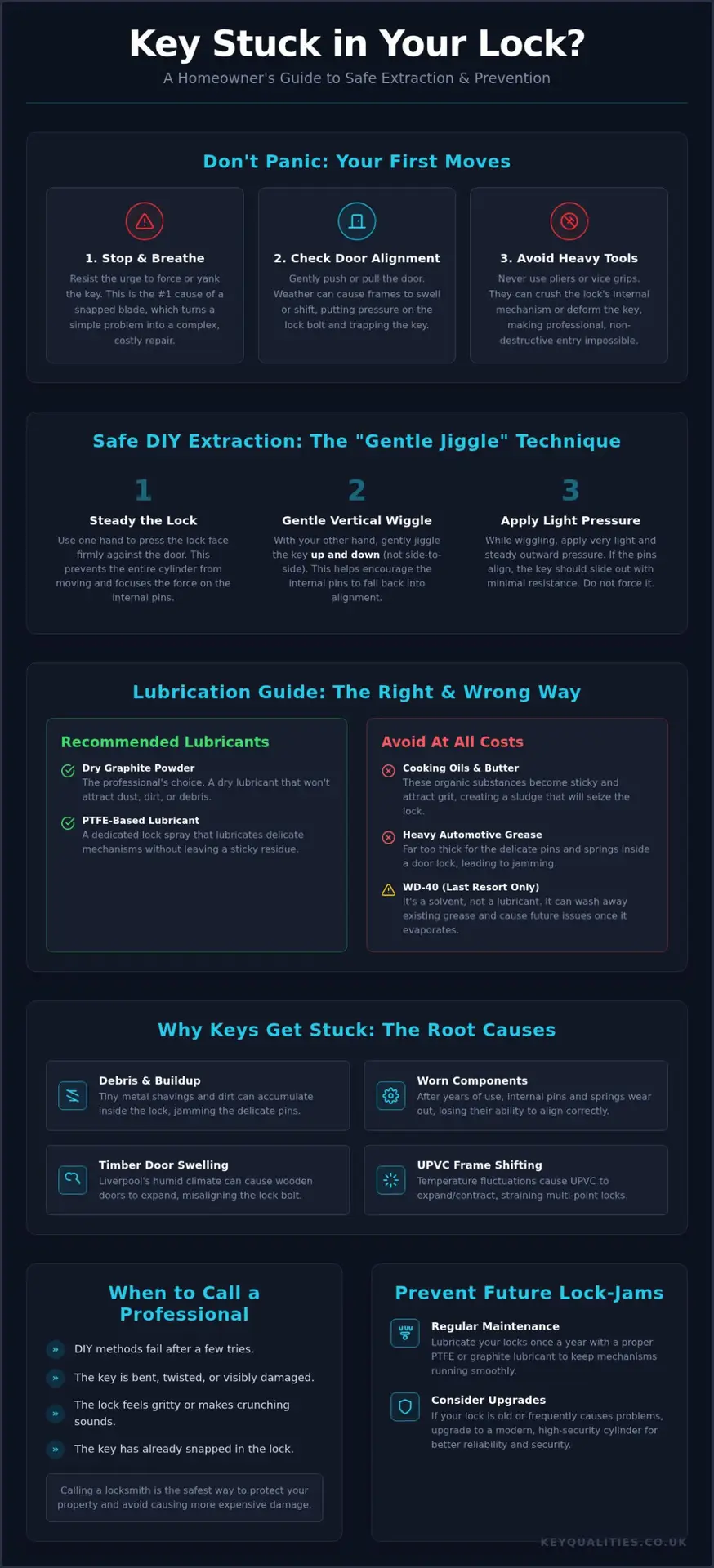
We’ve all been there; you’re tired, it’s raining, and your front door suddenly refuses to let go of your key. Finding your key stuck in lock liverpool can trigger an immediate sense of panic, but the most important thing you can do right now is stop. If you try to force the key by pulling or twisting with all your might, you risk snapping the metal blade deep inside the cylinder. This turns a simple extraction into a much more complex and expensive repair. Instead, take a deep breath and remember that we’re here to help you through the mechanical reasons why this is happening. Avoid the temptation to reach for heavy pliers or vice grips. These tools exert massive force that can easily deform the key’s teeth or even crush the lock face, making it impossible to use non-destructive entry methods later.
Often, the issue isn’t the key itself but the alignment of the door. Liverpool’s variable weather and coastal humidity can cause timber doors to swell or UPVC frames to shift slightly over time. Check if the door is fully closed or if the handle is slightly raised. We often find that applying a small amount of pressure toward the door frame can relieve the tension on the locking bolt, allowing the internal mechanism to relax. If the bolt is binding against the strike plate, the key cannot return to the neutral position required for removal. By easing that pressure, you might find the key slides out with zero resistance.
The “Gentle Jiggle” Technique
To safely attempt an extraction, you need to understand how a pin tumbler lock works. Inside the cylinder, small pins must align perfectly at the “shear line” for the plug to turn or the key to slide out. Use one hand to steady the face of the lock, pressing firmly against the cylinder so it doesn’t move or vibrate excessively. With your other hand, jiggle the key gently up and down while pulling very lightly. You’re trying to encourage those internal pins to drop back into their resting positions. Vertical alignment is crucial here. If the key moves slightly but refuses to budge further, the pins may be seized or the internal springs might be damaged, which is a sign to stop before the metal snaps.
What NOT to Use as Lubricant
It’s tempting to grab whatever is in the kitchen cupboard to loosen a stubborn lock. However, using standard cooking oils, butter, or heavy automotive grease is a mistake that will haunt you later. These substances are “sticky” and eventually attract dust and grit, creating a thick sludge that gums up the delicate springs inside your door. We recommend using a dry graphite powder or a dedicated PTFE-based lock lubricant that won’t attract debris. WD-40 should be used only as a last resort for extraction because it acts more as a solvent than a long-term lubricant; it can wash away existing grease and leave the metal vulnerable to future sticking once it evaporates.
Why Keys Get Stuck: Common Failures in Liverpool Homes
Understanding why your key is stuck requires looking beyond the metal blade itself. Often, the issue is a combination of mechanical wear and the unique environment we live in. Over years of consistent use, tiny metal shavings from the key and the internal pins can accumulate inside the cylinder plug. This fine debris acts like sandpaper, eventually jamming the delicate springs that allow the pins to move freely. While there are safe DIY methods for removing a stuck key, recognizing these root causes helps you decide whether a simple cleaning or a full replacement is necessary to keep your home secure.
Liverpool’s coastal climate plays a significant role in how our doors behave. The high humidity and frequent rainfall common in the North West cause timber doors to absorb moisture and swell. When a door expands by even a few millimetres, the lock bolt no longer aligns perfectly with the strike plate in the frame. This misalignment creates intense lateral pressure on the key. If you find your key stuck in lock liverpool during a particularly wet week, the weather is likely the primary culprit. Forcing the key in this situation is a mistake; the mechanical tension must be relieved first by adjusting the door’s position.
UPVC Door Misalignment
UPVC doors are particularly sensitive to temperature fluctuations. On a warm day, the plastic frame expands, which can throw the complex multi-point locking system out of sync. You might notice a “floppy handle” or find that you have to lift the handle with extra force to engage the bolts. This mechanical strain eventually transfers to the cylinder, trapping the key as it struggles to return to the neutral position. If your door feels stiff or temperamental, it is often a sign that you need professional UPVC door repairs in Liverpool to realign the mechanism and prevent a total lockout.
Internal Component Failure
Sometimes the failure is purely internal. Inside the cylinder, tiny springs hold the pins in place. In cheaper, non-branded cylinders, these springs can lose their tension or snap entirely, causing a pin to drop and trap the key. We always advocate for British Standard lock upgrades because they are engineered to higher tolerances. Signs like a “crunchy” feeling when turning the key or the key only working from one side of the door suggest your lock is reaching the end of its life. If you’re noticing these warning signs, a proactive home security assessment can help you identify weak points before they become a late-night emergency.
DIY Key Extraction: What is Safe and What is Risky?
If you’re currently facing a key stuck in lock liverpool, you’re likely weighing up whether to fix it yourself or call for help. A safe DIY starting point is the “tapping” method. While holding the key under very light tension, use the plastic handle of a screwdriver to tap the face of the cylinder or the key itself. These vibrations can sometimes “jump” a stuck pin back into its chamber, releasing the blade. It’s a gentle approach that respects the mechanical integrity of your lock and avoids the trauma of a snap.
The danger lies in the temptation to use brute force. We’ve seen many cases where a simple extraction turned into a full UPVC door gearbox replacement because the internal cam was snapped by a pair of pliers. A new key costs very little; a new gearbox is a significant investment. It’s always better to pause and think about the long-term health of your home’s security before reaching for the heavy tools. If the key doesn’t slide out after a few gentle attempts, the internal damage might already be more extensive than it looks on the surface.
The Risks of Snapping the Key
What happens if the blade breaks off? If the key snaps flush with the lock face, you lose your only point of leverage. At this stage, you can’t use pliers or tweezers to pull it out. Snapped keys often require specialist extraction tools like spiral extractors or saw-tooth blades. Without these, a simple jam can quickly escalate into an emergency drilling job. This means the entire cylinder will need to be destroyed and replaced just to get you back inside, which is why we always urge caution before you apply too much pressure.
When DIY is No Longer an Option
There’s a clear point where DIY efforts must stop. If you find the key is spinning in circles without actually engaging the bolt, the internal drive cam has likely failed. Similarly, if the key is stuck while the door is wide open, don’t try to force the door shut. You’ll end up trapped inside or outside with a door that can’t be secured. Knowing when to call a professional locksmith is about more than just convenience; it’s about making the most cost-effective choice for your property. When the mechanical feedback feels “mushy” or entirely disconnected, it’s time to step back and let an expert handle the extraction safely.
When to Call a Liverpool Emergency Locksmith
There comes a moment when the “gentle jiggle” isn’t enough and the reality of the situation sets in. If you are standing on your doorstep in the rain with a key stuck in lock liverpool homeowners often feel a rising sense of dread about their home’s security. We believe that your home should be your sanctuary, and being unable to secure your property for the night is a genuine emergency. If the key is trapped and the door is locked, or if it’s stuck while the door is wide open, you need a professional to restore your safety. Pushing through the frustration and trying to force the mechanism will only lead to more significant damage. We’re here to ensure that a mechanical failure doesn’t compromise your peace of mind or your family’s dignity.
Listen closely to the feedback your door is giving you. A “crunching” sound when you attempt to turn the key is a clear signal that internal components, such as the pins or the gearbox cam, have physically failed. Similarly, if the handle feels incredibly stiff or refuses to move into the locking position, the multipoint system is likely jammed. These aren’t issues that can be solved with a quick spray of lubricant. They require a steady, expert hand to prevent the need for a completely new door. When the mechanical stakes are this high, reaching out for professional support is the most responsible way to protect your investment.
What to Expect from a Professional Service
When we arrive on-site, our primary goal is a non-destructive entry. We use specialized tools to encourage the lock to release the key without damaging the cylinder or the surrounding door furniture. Our team will quickly diagnose whether the fault lies within the cylinder itself or if you require a UPVC door gearbox replacement. Most on-site repairs in Liverpool are completed within an hour, ensuring your routine is disrupted as little as possible. We don’t just fix the immediate problem; we look at the root cause to ensure you aren’t facing the same issue again next week.
Choosing a Local Expert Over a Call Centre
In an industry where rogue traders can unfortunately be found, choosing a local partner with 40 years of industry experience makes a vital difference. As of March 2026, there is still no mandatory government-issued license for locksmiths in the UK, which makes vetting your professional even more important. We understand the specific architectural quirks of Liverpool, from the heavy timber doors of Georgian terraces to the modern UPVC systems in newer dockside apartments. This local knowledge allows us to arrive with the correct parts and a deep-seated dedication to our community. If you are currently facing a lockout or a jammed door, our team is ready to provide emergency lockout assistance with the compassion and authority you deserve.
Long-Term Solutions: Preventing Future Lock Jamming
Once the immediate stress of a key stuck in lock liverpool is resolved, our focus shifts to ensuring you never face that vulnerability again. Maintenance isn’t just about hardware; it’s about the peace of mind that comes with a reliable home. We recommend a simple routine of lubricating your locks every six months using a PTFE-based spray. Unlike heavy oils or grease, these dry lubricants won’t attract the grit and dust that lead to internal jams. Similarly, ensure every family member uses high-quality, original keys rather than poorly cut copies. A key that’s even a fraction of a millimetre off can cause cumulative damage to the internal pins, leading to a failure when you least expect it.
Taking a proactive approach to your home’s mechanical health is the best way to avoid the anxiety of a lockout. We believe in empowering homeowners to understand their security systems. Scheduling a regular home security assessment allows us to catch minor mechanical shifts before they escalate. By identifying worn components or slight frame movements early, we can maintain the high standard of protection your family deserves without the urgency of an emergency call-out.
The Importance of British Standard BS3621
Investing in quality is a compassionate act for your home’s long-term stability. High-security anti-snap locks are engineered to withstand the specific mechanical stresses that cause cheaper cylinders to seize or jam. In the UK, many home insurance policies mandate that external doors meet the BS3621:2017 standard. Failure to comply could complicate a claim or even void your coverage. For Liverpool homeowners, 3-star Kitemarked cylinders represent the gold standard, offering a robust barrier against both environmental wear and criminal intent.
Maintaining Your UPVC Mechanisms
UPVC doors require a dedicated approach to prevent the gearbox failures that often trap keys. You can often spot a problem before it becomes an emergency by paying attention to the handle’s resistance. If you have to tug or lift the handle with increasing force, the door is likely out of alignment. A simple 5-minute adjustment to the hinges or strike plate can realign the entire system and save you from a £200 repair bill for a snapped gearbox. By staying mindful of these small changes, you ensure your key stuck in lock liverpool experience remains a one-time event rather than a recurring frustration.
Restoring Your Home’s Security and Peace of Mind
Dealing with a mechanical failure at your front door is more than a minor inconvenience; it’s a direct challenge to your sense of safety. By understanding the immediate steps to take and recognizing the risks of using brute force, you’ve already taken the most important action to protect your property. Whether the issue stems from Liverpool’s damp climate or a worn internal mechanism, the goal is always to resolve the problem without causing further damage to your door or frame. Maintaining your locks with the right lubricants and choosing high-security upgrades ensures that your home remains a secure sanctuary for your family.
If you’re currently facing a key stuck in lock liverpool, our team is ready to provide the compassionate, professional support you need. As local Liverpool specialists and UPVC repair experts with 40+ years of experience, we prioritize non-destructive entry and long-term reliability. We treat every home with the dignity it deserves, acting as a bridge between your current frustration and a secure, lasting outcome. Get Expert Help from Key Qualities Now and let us help you regain control of your home’s security with confidence and ease.
Frequently Asked Questions
Can I use WD-40 if my key is stuck in the lock?
You can use WD-40 as a temporary solvent to help extract a trapped key, but it isn’t a long-term solution for your lock’s health. Because it acts more as a cleaner than a true lubricant, it can eventually dry out the internal mechanism and attract more debris. For ongoing maintenance to prevent a key stuck in lock liverpool, we recommend using a PTFE-based spray or dry graphite powder which keeps the pins moving freely without gumming up the cylinder.
How much does it cost to have a stuck key removed in Liverpool?
The cost of removing a stuck key in our city typically varies based on the time of day and the complexity of the extraction. While there are general industry averages for daytime and out-of-hours assistance, the final investment often depends on whether the lock remains functional or requires a mechanical upgrade. We always suggest choosing a local professional who provides clear, fixed-price quotes so you have complete peace of mind before any work begins on your property.
Will a locksmith have to break my lock to get the key out?
In the vast majority of cases, a professional can remove a stuck key using non-destructive entry techniques that leave your lock perfectly intact. We use specialist extraction tools designed to bypass the pins and pull the blade out without the need for drilling or force. We only consider replacing the cylinder if the internal components have physically failed or if an upgrade to a British Standard lock would provide your family with better long-term security.
Why does my key get stuck only when it is cold outside?
Cold weather causes the metal components of your lock to contract and can also lead to UPVC frames shifting slightly within the wall. If moisture has entered the cylinder, it can freeze and seize the pins in place, which is a common issue during damp North West winters. If you find your key stuck in lock liverpool during a cold snap, it’s often a sign that the door’s alignment needs a slight adjustment to account for the seasonal movement of the materials.
What should I do if my key snaps off in the lock?
If your key snaps, the most important step is to stop touching the lock immediately to avoid pushing the broken blade deeper into the cylinder. Trying to “fish” it out with improvised tools like paperclips often damages the delicate internal springs beyond repair. A professional has the specialist equipment to grip the remaining metal and slide it out safely, which often prevents the need for a much more expensive full lock replacement.
Is a stuck key covered by my home insurance?
Whether a stuck or snapped key is covered depends on if your policy includes specific “Home Emergency” assistance. While standard buildings and contents insurance might not cover a simple mechanical jam, many premium policies provide help for incidents that leave your home’s security compromised. It’s also worth checking if your insurer requires your external doors to meet the BS3621:2017 standard to ensure your full policy remains valid in the event of a claim.
How can I tell if my UPVC door gearbox is failing?
You can identify a failing gearbox by a handle that feels unusually heavy, a “notchy” sensation when turning the key, or a handle that doesn’t spring back to the horizontal position. If you hear a distinctive clicking or crunching sound inside the door when you lift the handle, the internal gears are likely worn or misaligned. Catching these warning signs early allows for a straightforward adjustment before the entire mechanism jams and leaves you locked out.
How long does a locksmith take to arrive in Liverpool central?
Arrival times in the city centre are influenced by local traffic and current demand, but the goal of any dedicated local expert is to reach you as quickly as possible. Choosing a specialist based within Liverpool ensures they have the local knowledge to navigate to your property efficiently. We prioritize these calls with a genuine sense of urgency because we understand the stress and vulnerability that comes with being unable to secure your own front door.