
Most homeowners in Liverpool believe that a whistling window or a cold chill simply means the rubber seals have reached their end, but the truth is often hidden in the metalwork. You might find yourself turning up the thermostat only to feel a biting Mersey breeze cutting through your living room, leaving you with cold spots and rising energy costs. We know how frustrating it is when your home doesn’t feel like the sanctuary it should be. It’s about more than just a high heating bill; it’s about the comfort and well-being of your family during the colder months.
We’re here to help you stop draughts from windows in Liverpool by looking past temporary tapes and addressing the mechanical failures that cause frames to sit unevenly. In this 2026 guide, we’ll show you how to identify hinge fatigue and handle issues that prevent a flush seal. You’ll discover how moving toward permanent mechanical solutions can restore the warmth, silence, and security your home deserves. We’ll walk through the process of moving from quick fixes to professional repairs that ensure every window in your house operates with ease and efficiency.
Key Takeaways
- Understand why Liverpool’s coastal location creates unique pressure on window frames and how this leads to persistent cold spots.
- Master simple diagnostic methods, such as the light test, to identify the specific gaps where heat is escaping your home.
- Learn why focusing on mechanical hinge and handle repairs is the most reliable way to stop draughts from windows in Liverpool.
- Follow a practical maintenance schedule for lubricating moving parts and cleaning gaskets to prevent future seal failures.
- Discover how professional repairs can restore your home’s thermal integrity without the high cost of full window replacements.
Why Liverpool Homes Suffer from Window Draughts
A window draught is technically defined as unintended air ingress. It occurs when there is a pressure differential between the inside and outside of your property, or when a physical seal has failed. For those of us trying to stop draughts from windows in Liverpool, this isn’t just a scientific definition. It’s the reality of sitting in a living room where the air never quite feels still. When your home’s thermal envelope is compromised, you aren’t just losing heat; you’re losing the sense of comfort and security that every household deserves.
Ignoring a small draught might seem like a minor compromise, but the long-term effects are significant. Beyond the obvious spike in heating bills, consistent air leaks introduce moisture into the fabric of your building. When cold external air meets the warm air of your home at a gap, condensation forms. Over time, this leads to structural damp and mould growth, which can impact both the integrity of your frames and the health of your family. We see ourselves as partners in maintaining your home, ensuring that small mechanical issues don’t turn into expensive structural problems.
The Impact of Liverpool’s Coastal Weather
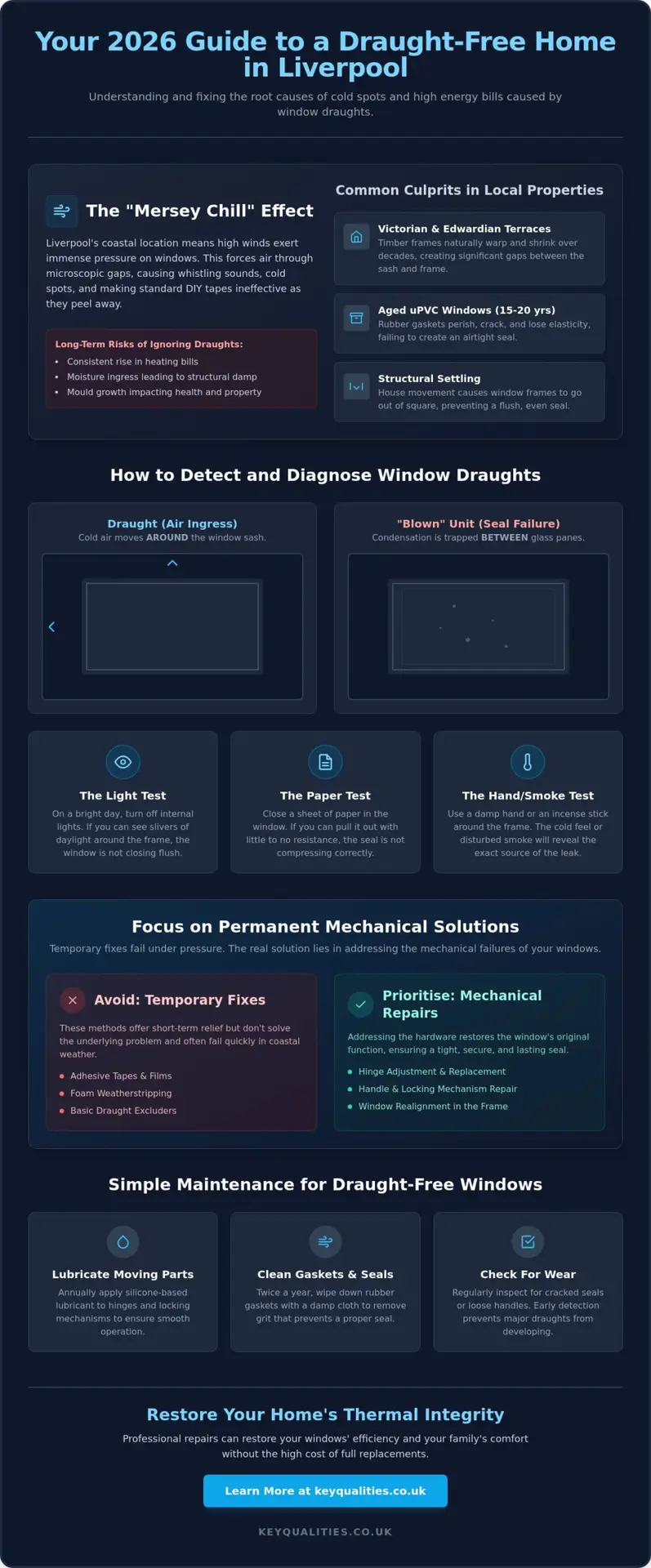
Our city’s location on the edge of the Irish Sea brings a unique set of challenges. The “Mersey Chill” is a real phenomenon where high wind speeds exert immense physical pressure on your window frames. During a gale, these winds force air through microscopic gaps that would remain unnoticed in calmer inland cities. You’ve likely heard the “whistling” effect during a storm; this is the sound of air being compressed as it’s forced through a failing seal or a misaligned hinge. While a basic draught excluder can help with floor-level breezes, they are often insufficient against the sustained atmospheric pressure found in coastal Merseyside. Standard DIY tapes frequently peel away under these conditions, as the constant vibration and pressure from the wind break down the adhesive backing.
Common Culprits in Local Properties
Liverpool’s diverse architecture means that different homes face different vulnerabilities. We’ve identified several recurring themes across the city:
- Victorian and Edwardian Terraces: In areas like Aigburth, Woolton, and Smithdown, many period homes still feature timber frames. Over decades, wood naturally warps and shrinks, creating gaps between the sash and the frame that didn’t exist when the house was built.
- Aged UPVC Windows: Many modern homes are fitted with UPVC units that are now 15 to 20 years old. Rubber gaskets have a finite lifespan; they eventually perish, crack, and lose the elasticity required to create an airtight seal.
- Structural Settling: As houses settle, window apertures can move slightly out of square. This causes the window sash to sit unevenly, meaning the locking points don’t pull the window flush against the frame.
Whether you’re in a historic terrace or a modern apartment, the goal remains the same: a home that stays warm regardless of what the weather is doing outside. Identifying these specific local factors is the first step toward a permanent, mechanical fix.
How to Detect and Diagnose Window Draughts
Before you can effectively stop draughts from windows in Liverpool, you must identify whether the issue is a simple seal failure or a more complex mechanical breakdown. Many residents mistake “blown” double glazing for a draught. If you see mist or condensation trapped between the two panes of glass, the unit itself has failed. While this affects your home’s thermal efficiency, it is distinct from an air draught, which is the physical movement of cold air around the edges of the window frame. We believe every Liverpool family deserves a home that feels like a sanctuary, and that starts with an accurate diagnosis of where your heat is escaping.
The “Light Test” is one of the most reliable ways to spot a significant gap. On a bright afternoon, turn off all internal lights and draw the curtains or blinds partially. Carefully inspect the perimeter of the frame. If you can see slivers of daylight peeking through where the opening sash meets the fixed frame, your window is not closing flush. Another professional trick is the “Paper Test.” Open your window, place a sheet of A4 paper across the frame, and close the window fully. If you can pull the paper out with little to no resistance, the rubber gaskets aren’t compressing enough to create an airtight seal. This diagnostic insight is a core part of this Energy Saving Trust guide, which emphasizes that even small gaps can lead to significant energy waste.
DIY Detection Methods You Can Try Today
If the light and paper tests are inconclusive, try using a damp hand or an incense stick. Run your hand slowly around the frame on a windy day; the moisture on your skin will make even a slight breeze feel icy. Alternatively, watch the smoke from an incense stick held near the window edges. If the smoke flickers or is sucked toward the glass, you’ve found a leak. Don’t forget to step outside and check the external mastic. If the sealant between the brickwork and the window frame is cracked or peeling, cold air will bypass the window entirely and enter through the wall cavity. If you notice these issues, a professional window hinge and handle repair can often resolve the problem without the need for a full replacement.
Mechanical Warning Signs
Sometimes the cause isn’t the seal, but the metal components that hold the window in place. Look for these specific indicators of mechanical fatigue:
- Corner Gaps: If the window looks tight at the handle side but shows a visible gap at the top or bottom corners, your hinges have likely dropped or warped.
- Handle Resistance: A handle that feels “stiff” or doesn’t pull the window tight against the frame suggests the multipoint locking system is misaligned.
- Physical Wear: Visible rust, brass filings on the sill, or a grinding sound when you operate the sash are clear signs that the mechanism is failing.
By identifying these specific mechanical failures, you can move beyond temporary fixes and toward a permanent solution that restores the dignity and comfort of your living space.
DIY vs. Professional Draught-Proofing: Making the Right Choice
Choosing between a quick trip to the local hardware store and calling in a specialist is a decision many of our neighbors face every winter. When the wind picks up across the Mersey, the immediate instinct is to find any way to block the cold. While we understand the urge for a fast fix, it’s vital to distinguish between a temporary stop-gap and a permanent solution. We view our role as more than just technicians; we’re your partners in ensuring your home remains a warm, dignified space for your family to thrive in.
Foam or rubber strips have their place as an emergency measure. If you’re in the middle of a November gale, applying a stick-on seal can provide immediate, albeit fleeting, relief. However, these products don’t truly stop draughts from windows in Liverpool; they merely mask the symptoms of a mechanical failure. While a DIY fix might last a few months before the adhesive fails, a professional mechanical repair is designed to protect your home’s thermal integrity for years. Investing in the correct fix early prevents the compounding damage that occurs when windows are forced to operate with faulty components.
The ‘Stick-On’ Solution Trap
Thick foam strips can be surprisingly counterproductive for the health of your window units. When you force a window shut against a thick adhesive excluder, you put immense strain on the hinges and the locking gearbox. This pressure often causes the metal friction stays to bend or the screws to loosen, which actually worsens the gap you were trying to close. In Liverpool’s unique coastal environment, the humid and salty air quickly degrades the adhesive backing on these tapes. This leads to peeling and a messy, sticky residue that is difficult to remove and detracts from the aesthetic of your property. Relying on these tapes often results in a cycle of constant reapplication and frustration.
The Professional Mechanical Fix
True thermal integrity comes from a window sash that closes exactly as the manufacturer intended. We focus on the root cause by replacing ‘friction stays’, which are the specialized hinges that control the sash’s movement and its final resting position against the frame. When these hinges are replaced and the multipoint locking system is precisely adjusted, the window sash is pulled firmly and evenly into the original rubber gasket. This mechanical alignment creates a permanent, airtight seal that no amount of tape can replicate. Opting for Professional window repairs in Liverpool is often a fraction of the cost of a full window replacement. It’s a sustainable, high-standard approach that restores your home’s warmth while avoiding the unnecessary waste and expense of installing entirely new frames.
Maintenance Checklist for Draught-Free Windows
Prevention is always kinder than a cure. To effectively stop draughts from windows in Liverpool, a proactive maintenance schedule is essential for every household. Our coastal air, while refreshing, carries salt and moisture that can accelerate the wear of moving parts and degrade rubber seals. By dedicating a few minutes twice a year to your window hardware, you ensure that your home remains energy efficient and secure. We see this as an essential part of home stewardship, protecting both the physical structure of your property and the daily well-being of your family.
Start with a thorough visual inspection of every room. You should specifically check for “dropped” sashes, which often manifest as a thin, wedge-shaped gap at the top corner of the frame. This usually indicates that the hinges are beginning to fatigue or have moved out of alignment due to the weight of the glass. Additionally, ensure your handles are tight. A loose handle doesn’t just feel flimsy; it prevents the internal locking cams from fully engaging with the frame. When the cams don’t reach their intended position, they fail to pull the sash tight against the gasket, leaving a path for cold air to enter.
Caring for Your UPVC Seals
Rubber gaskets are the front line of your home’s thermal integrity. Over time, dirt and grit accumulate in the tracks and on the seals themselves, which can prevent the window from closing flush. We recommend cleaning these seals seasonally with warm, soapy water and a soft cloth. It is vital to avoid harsh chemical cleaners, as these can strip the natural oils from the rubber and cause it to perish prematurely. To keep the gaskets supple and airtight, apply a light coat of silicone-based lubricant. This prevents the rubber from sticking to the frame or cracking during the harsh winter frosts. If a seal feels brittle to the touch or has flattened permanently, it is a sign that the component needs professional replacement to restore the seal.
Hinge and Hardware Health
The metal components of your windows are the mechanical muscles that pull the seals together. Lubricating hinges and handles twice a year, ideally in the spring and autumn, ensures smooth operation and prevents rust. Pay close attention to the friction stays; if you see any bowing in the metal or visible gaps when the window is supposedly closed, the hinge is likely bent and requires attention. The internal gearbox is another critical element, as it translates the handle’s movement into the locking force needed for proper insulation. For a deeper dive into protecting your property, consult our UPVC maintenance guide for Liverpool homes. If your windows still feel cold after completing these steps, a professional window hinge and handle repair is the most reliable way to restore your home’s warmth and dignity.
How Key Qualities Restores Your Home’s Thermal Integrity
Our journey in the North West spans 40 years of dedicated construction and maintenance experience. This long-standing presence isn’t just about technical skill; it’s about a deep-seated dedication to the families and communities we serve. We understand that a draughty window is more than a minor inconvenience. It’s a compromise to your home’s dignity and your family’s comfort. We’ve built our reputation on providing a reliable, high-standard service that treats every property with the care it deserves.
Every interaction we have is measured against our Key standard of excellence. We don’t see ourselves as a mere repair service; we act as a bridge between your current housing frustrations and a restored sense of well-being. Our approach is mission-driven and rooted in transparency. We believe in empowering homeowners with the knowledge they need to stop draughts from windows in Liverpool without resorting to unnecessary and expensive full replacements. By focusing on the human element of maintenance, we ensure that our solutions are as compassionate as they are professional.
One of the most effective ways we help is through a comprehensive Home Security Assessment. This isn’t just about locks; it’s a holistic look at your window’s mechanical health. A window that fails to lock securely is almost always the same window that lets in a biting Mersey breeze. We identify these weak points simultaneously, ensuring your home is both airtight and safe. This dual focus on security and thermal integrity is a defining characteristic of our commitment to the Liverpool community.
Why We Focus on Repair Over Replacement
We’re passionate about saving our neighbors hundreds of pounds by focusing on precision repairs. Most window draughts are caused by failing hinges or misaligned locking cams, not the frames themselves. By replacing your friction stays and restoring the original insulation of your UPVC units, we provide a high-standard fix that avoids the waste of a full installation. Our commitment to non-destructive entry and repair means we protect your existing decor while restoring your home’s warmth. It’s a steady, rhythmic process that moves from identifying your specific needs to offering a high-quality, permanent solution.
Booking Your Local Liverpool Expert
We pride ourselves on a rapid response for urgent mechanical failures, especially when windows are stuck open or won’t lock against the wind. Our labor charges are transparent and purposeful, designed to make professional maintenance accessible for busy households. We don’t use aggressive sales jargon; we offer trust, stability, and a long-term commitment to your property’s health. You can Book your home security and draught assessment today to take the first step toward a warmer, more secure home. Let us show you how a professional, value-aligned approach can improve your quality of life this winter.
Secure a Warmer Future for Your Liverpool Home
Realizing that a cold home is often the result of mechanical wear rather than a need for full window replacement is the first step toward reclaiming your comfort. We’ve explored how the persistent coastal wind pressure in Merseyside demands more than just temporary tapes. By focusing on the health of your hinges, handles, and locking systems, you ensure your property remains a sanctuary of warmth and peace for years to come.
Our local Liverpool family-run business brings over 40 years of industry experience to every doorstep. As specialists in UPVC mechanical repairs, we’re dedicated to helping you stop draughts from windows in Liverpool through high-standard, reliable solutions. You don’t have to settle for a chilly living room or rising energy bills when a permanent, professional fix is within reach. Secure your home and stop the chill with Key Qualities. We’re here to support you in creating the comfortable, energy-efficient environment your family deserves.
Frequently Asked Questions
How much does it cost to stop draughts from windows in Liverpool?
The cost to stop draughts from windows in Liverpool depends entirely on the root cause of the air ingress. Factors such as the number of failing hinges, the condition of the multipoint locking system, and whether handles need replacing all play a role. We focus on providing transparent assessments that prioritize mechanical repairs over full window replacements to ensure you receive the most value for your investment.
Can I fix window draughts myself with tape?
Adhesive tapes are a temporary stop-gap rather than a permanent solution for home insulation. While they might provide immediate relief during a storm, Liverpool’s humid and salty coastal air often causes the adhesive to fail within months. Additionally, thick tapes can actually strain your window hinges. This often leads to more significant mechanical gaps over time, making the original problem worse.
Why is my UPVC window draughty even when it’s closed tightly?
A closed window can still be draughty if the sash isn’t sitting perfectly flush against the frame’s rubber gaskets. This is often caused by “dropped” hinges or a misaligned locking mechanism that fails to pull the window tight. Even a gap of just a few millimeters is enough to let in the biting Mersey chill and disrupt your home’s thermal integrity.
Do I need new windows if I can feel a cold breeze?
You rarely need to replace entire window units just because of a cold breeze. Most issues are mechanical and can be resolved by replacing the friction stays or adjusting the internal gearbox. Our mission is to restore your existing windows to their original standard. This saves you the high cost and disruption of a full installation while ensuring your home stays warm.
Will draught-proofing my windows really lower my energy bills?
Draught-proofing is one of the most effective ways to lower your energy bills by preventing heat from escaping. When you stop draughts from windows in Liverpool, your heating system doesn’t have to work as hard to maintain a consistent temperature. This simple restoration of your home’s thermal envelope leads to noticeable savings and a much more comfortable living environment for your family.
What is the best draught excluder for sash windows?
For traditional sash windows, the most effective solution involves installing professional brush seals or making mechanical adjustments to the weights and pulleys. Unlike stick-on foam, these permanent fixes allow the window to slide smoothly while creating a tight seal. This approach preserves the historical dignity of your property while significantly improving its modern thermal performance without interfering with the mechanism.
How do I know if my window hinges need replacing?
You can tell your hinges need attention if you see daylight peeking through the corners or if the window feels “stiff” when opening. A dropped sash will often leave a visible gap at the top of the frame even when locked. If you notice any bowing in the metal friction stays, it’s a clear sign that mechanical fatigue has set in and professional repair is required.
Is there a difference between a draught and a cold bridge?
Yes, a draught is the physical movement of cold air into your home through gaps, whereas a cold bridge is heat loss through solid materials like metal or glass. While both make a room feel colder, draughts are typically easier to fix through mechanical repairs. Addressing air ingress is the most immediate way to improve your home’s comfort and energy efficiency during the winter months.