
Why Your Door Handle Choice Matters for Liverpool Home Security
A door handle is far more than a simple lever for opening and closing a door. It is the primary interface between you and the complex locking mechanism that protects your home. For Liverpool residents, choosing the right door handle is a critical decision that impacts not just aesthetics, but security, durability, and even the validity of your home insurance.
- The Human Interface: Your handle operates the latch and engages the locking points. A flimsy or poorly fitted handle can put stress on the internal gearbox, leading to premature failure.
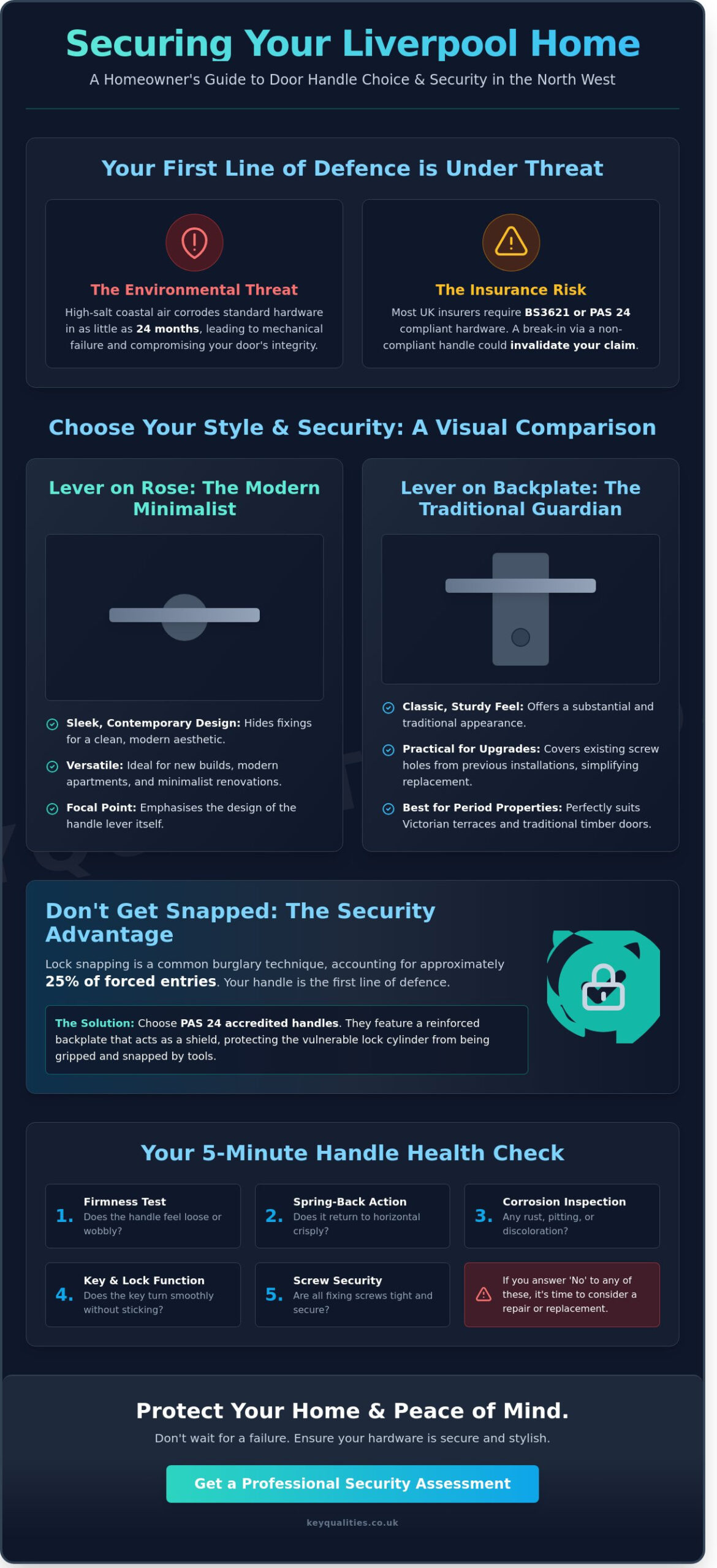
- The Coastal Factor: The high-salt air across the North West coast can quickly corrode and tarnish low-quality finishes, making your property look neglected and potentially weakening the hardware.
- Insurance Compliance: Many Liverpool home insurance policies require specific security standards. A non-compliant or broken door handle can be seen as a security lapse, potentially invalidating a claim in the event of a burglary.
- Door Compatibility: Liverpool’s homes feature a mix of door types, primarily Timber, Composite, and UPVC, each requiring a specific type of handle for correct and secure operation.
Matching Handles to Liverpool’s Diverse Housing Stock
The architectural character of Liverpool demands a thoughtful approach to hardware. A one-size-fits-all solution rarely works, and an inappropriate choice can cause long-term damage.
According to Door handle types and materials, this is a well-documented area of ongoing research and practical application.
- Consider traditional brass or chrome handles for the city’s many Victorian terraces to maintain their period character.
- For modern apartments and new-builds, high-security handles with minimalist designs in satin nickel or matt black are a popular and secure choice.
- Fitting a heavy, modern handle to an older, delicate timber door frame can introduce mechanical stress, leading to warping or misalignment over time.
The Security Link: Handles and Anti-Snap Locks
Your door handle is the first line of defence against common burglary methods. A standard handle can be easily ripped off, exposing the lock cylinder to attack.
- The handle’s backplate is the first physical barrier protecting your lock. Weak backplates can be bent or snapped, giving intruders immediate access to the cylinder.
- For external doors, always look for handles that are PAS 24 accredited. This security standard ensures the handle has been tested to withstand common attack methods.
- A high-security door handle incorporates a reinforced backplate and design features that shield the cylinder, effectively preventing the lock-snapping techniques frequently used by burglars in Liverpool. Find out more in our guide to anti-snap lock installation in Liverpool.
Choosing the Right Door Handle Type for Your Property
Navigating the different types of door handle can be confusing. Understanding the main categories is the first step to making an informed choice for your home.
- Lever on Backplate: This is the traditional style, where the lever is attached to a long rectangular plate that also houses the keyhole. It’s a classic choice for timber doors and many older UPVC doors.
- Lever on Rose: A more contemporary option where the lever is mounted on a circular or square plate (the “rose”), with the keyhole (escutcheon) as a separate fitting. This offers a clean, minimalist look popular in modern renovations.
- UPVC Multipoint Handles: Designed specifically for doors with multipoint locking systems, these handles require a critical measurement: the “PZ dimension,” which is the distance between the centre of the spindle and the centre of the keyhole.
- Pull Handles and Knobs: These are fixed handles with no moving parts, used on doors that are opened by pulling or pushing and are locked separately with a deadbolt. They are common on commercial properties and high-end residential entrance doors.
The UPVC Specialist View: PZ Centres and Screw Centres
For the vast majority of Liverpool homes with UPVC doors, getting the measurements right is non-negotiable. An incorrect handle simply will not fit or function.
Research published by UK security standards for doors shows that this is a well-documented area of ongoing research and practical application.
- The 92mm PZ Standard: In the UK, the most common PZ measurement for UPVC door handles is 92mm. To measure it, simply use a tape measure from the centre of the square spindle hole to the centre of the circular part of the keyhole.
- The Danger of “Universal” Handles: Be wary of handles marketed as “universal.” They often have oversized openings that can leave gaps, creating draughts and providing a potential access point for intruders to manipulate the lock.
- Sprung vs. Unsprung: Check if your new handle is “sprung.” Sprung handles have their own spring cassettes to return the lever to horizontal. Unsprung handles rely entirely on the spring in the door’s internal gearbox. Fitting the wrong type can cause your handle to droop or fail quickly.
Internal vs. External Handles: Material and Finish
The material and finish of your door handle affect both its appearance and its lifespan, especially when exposed to the elements.
- Polished Chrome vs. Satin Nickel: While both are popular, a high-quality satin nickel or stainless steel finish often proves more resilient to the damp, salty Liverpool air than standard polished chrome, which can “pit” over time.
- The Rise of Matt Black: Matt black handles have become a staple of modern interior design in Liverpool, offering a striking contrast on both internal and external doors. Ensure any external black hardware has a durable, weather-resistant coating.
- Internal Handle Quality: While internal door handles don’t need a locking cylinder, the quality of their internal springs is still vital. A cheap internal handle will quickly start to droop, making your home feel poorly maintained.
Quality Matters: Why Cheap Handles Fail in the North West
It can be tempting to pick up a cheap door handle from a DIY superstore, but this is often a false economy that leads to greater expense and compromised security down the line.
- The “DIY Shop Trap”: A £15 handle might seem like a bargain, but if it fails at an inconvenient time, it can easily lead to a £150 emergency locksmith call-out when you’re locked out or your door won’t secure.
- Material Science: Professional-grade handles are typically made from solid brass or stainless steel. Cheaper alternatives are often made from zinc alloys, which are more brittle and susceptible to corrosion and snapping under pressure.
- The Return Spring: The single most common point of failure in a cheap handle is the return spring. A weak or poorly made spring will quickly wear out, causing the dreaded “drooping handle” syndrome.
- Long-Term Value: Investing in professional-grade hardware from a trusted locksmith ensures durability. A quality door handle should last for a decade or more, saving you money on repeat replacements and repairs.
The “Floppy Handle” Syndrome: Gearbox vs. Spring
One of the most common issues Liverpool homeowners face is a “floppy” or “drooping” door handle. It’s crucial to diagnose the cause correctly to avoid paying for the wrong repair.
- The Diagnosis: If the handle is floppy on both the inside and outside of the door, the problem is almost certainly a failed spring inside the door’s internal mechanism (the gearbox). If only one side is floppy, it’s likely the spring cassette in that specific handle has broken.
- An Early Warning Sign: A floppy handle is often the first indication that the internal gearbox is under strain and heading for a total failure, which can result in you being locked in or out.
- A door handle that consistently fails to return to a perfectly horizontal position is a clear warning sign of excessive internal friction or a failing spring mechanism.
Corrosion and Salt Air: The Liverpool Factor
Proximity to the coast has a significant impact on the longevity of external metal fixtures. The salt in the air accelerates corrosion and can ruin a handle’s finish in a few short years.
- Coastal Corrosion: The salty, damp air across Merseyside attacks metal finishes, causing pitting, tarnishing, and eventually, structural weakness if left unchecked.
- PVD Finishes: For maximum durability, look for handles with a PVD (Physical Vapour Deposition) finish. This advanced coating process creates a much tougher and more corrosion-resistant surface than standard plating.
- Simple Maintenance: To prevent pitting and keep your door furniture looking its best, simply wipe it down with a soft, damp cloth and a little soapy water every few months, then dry it thoroughly. Avoid using abrasive chemical cleaners.
When to Replace or Repair Your Door Handles
Knowing when a handle needs a simple fix versus a full replacement can save you time and money. A quick health check can help you decide on the best course of action.
- The 5-Minute Health Check: Regularly check your handles. Are they loose on the door? Do they spring back to horizontal? Is the finish pitted or flaking? Does the key turn smoothly? Answering these questions can catch problems early.
- DIY Replacement: For a like-for-like swap, replacing a standard lever handle can be a straightforward DIY job. We provide a simple guide below.
- When to Call a Professional: If you encounter seized or rounded-off screws, if the new handle doesn’t align with the internal mechanism, or if the problem persists after fitting a new handle, it’s time to call an expert.
- The Risk of DIY Errors: Installing a handle incorrectly, particularly on a multipoint lock, can damage the gearbox or cause the door to jam shut, creating a “lock-in” or “lock-out” emergency. For a guaranteed safe and secure result, consider professional door repairs in Liverpool.
How to Measure for Replacement UPVC Handles
To ensure you buy the correct replacement handle for your UPVC or composite door, you need three key measurements.
- Screw Centres: Measure the distance in millimetres (mm) from the centre of the top fixing screw to the centre of the bottom fixing screw.
- The PZ Measurement: Measure the distance from the centre of the square spindle hole to the centre of the circular part of the keyhole. This is almost always 92mm on modern UK doors.
- Spindle Width: Check the width of the square metal bar (the spindle) that passes through the door. The UK standard is 8mm.
Troubleshooting Common Handle Issues
- Sticky or Stiff Handle: This is often a sign that the door has dropped and is out of alignment, or that the internal gearbox is failing. Do not force it.
- Handle Comes Off in Your Hand: This usually means the grub screw that holds the lever onto the backplate has come loose, or the spindle has failed.
Professional Handle and Lock Services in Liverpool
At Key Qualities, we understand that a door handle is a vital part of your home’s security system. We don’t just replace parts; we diagnose problems and provide lasting solutions that restore your peace of mind.
- Specialist Knowledge: We specialise in the repair and restoration of UPVC door mechanisms and handles, a common issue in many Liverpool properties.
- Decades of Experience: With over 40 years of construction and property maintenance experience, we have a deep understanding of how Liverpool’s buildings and their hardware function.
- Repair-First Philosophy: Where possible, we prioritise repair over replacement. If a simple component has failed, we will fix it to save you the cost of a whole new system.
- Commitment to Security: All our installations meet the highest British Standards, including BS3621, ensuring your home is secure and your insurance is valid.
Expert UPVC Gearbox and Mechanism Repair
Often, a faulty handle is just a symptom of a deeper problem within the door’s multipoint locking system.
- A Holistic Approach: Simply replacing a floppy door handle will not fix a broken gearbox. We will diagnose the root cause to ensure the problem is solved permanently. Learn more with our guide to multipoint locking system repair.
- Sourcing Rare Parts: We have extensive experience sourcing rare and discontinued handle styles and mechanisms for older Liverpool homes, preserving the character of your property.
Secure Your Home with Key Qualities
Don’t let a faulty door handle compromise your family’s safety. Our expert team is ready to provide professional advice and reliable service.
- Book a free, no-obligation home security assessment to check the health of all your door handles, locks, and mechanisms.
- We offer a rapid response service for broken handles that have left your home vulnerable and unsecured.
- Upgrade your door handles and security today with Key Qualities.